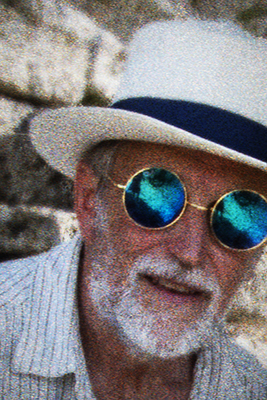
John Russell
ABOUTFor many years, I worked as an advertising photographer, responding to tightly defined briefs in which every element of an image was required to communicate with clarity, control and intent. That discipline remains part of my visual language, but my personal work begins where the brief ends. Freed from the demands of commercial photography, I am now able to pursue a more intuitive and contemplative relationship with the image—one concerned less with description than with sensation, atmosphere and memory.
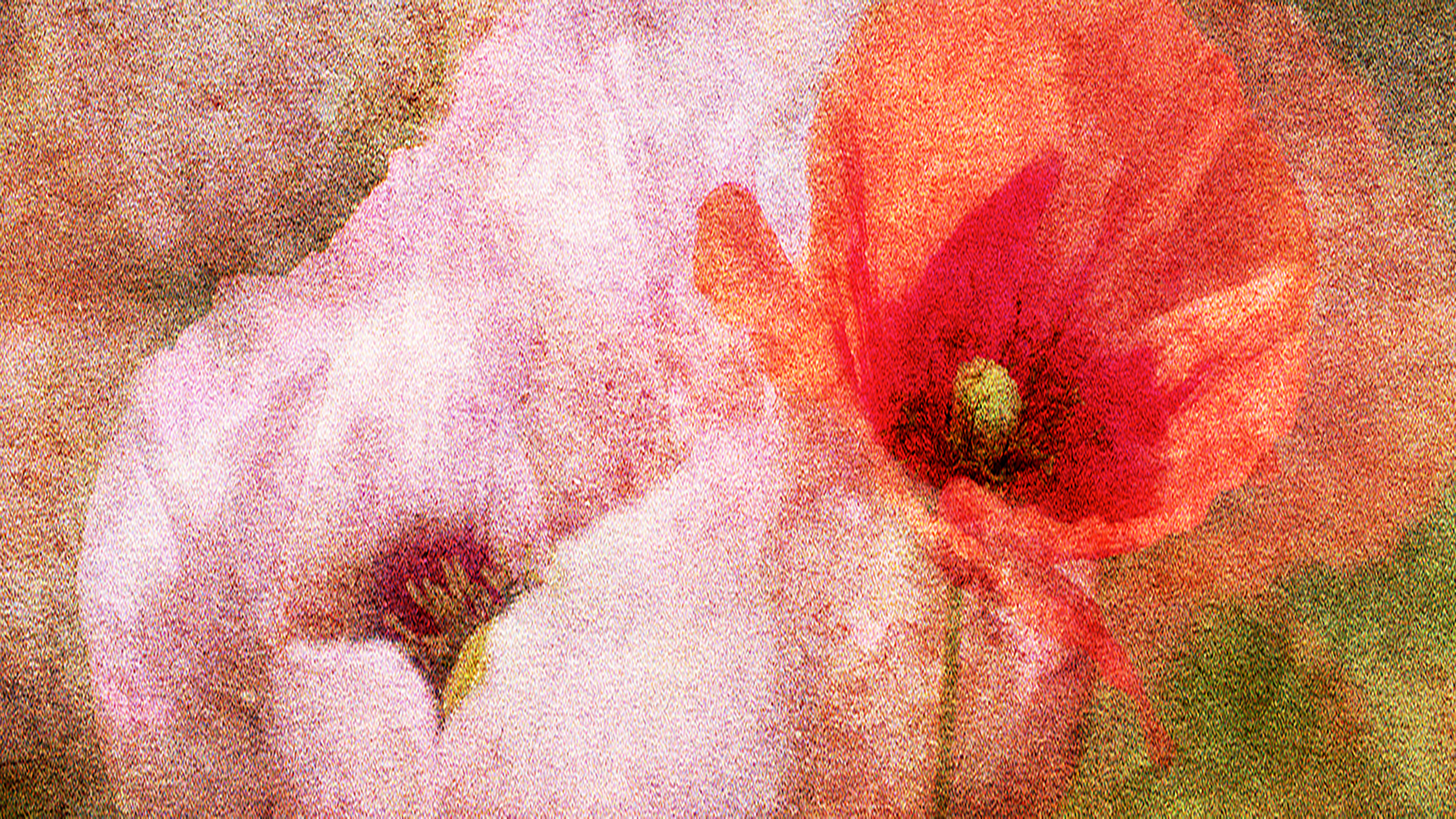
I am drawn to the softness and luminosity of Impressionist painting, and particularly to the pointillist language of Georges Seurat. In my photographs, the image is not intended to resolve entirely into a fixed, sharply defined reality. Instead, it is built from countless fragments of light, colour and texture. The viewer is invited to move between recognition and abstraction, allowing the image to emerge gradually rather than presenting itself all at once.
A significant influence on this approach comes from my earlier experience with film. I was deeply influenced by an emulsion, now long discontinued, which—when pushed in processing—produced an unusually large and irregular grain structure. I used it extensively in my personal work before it disappeared from production. That grain became more than a technical characteristic: it became a visual language. Its random, organic structure disrupted the photographic image, softening detail and introducing an element of chance.
The work I make now continues that exploration through a contemporary photographic process but still retaining the original grain structure. I seek to recreate not simply the appearance of that historic material, but the feeling it offered: the sense that a photograph could be both precise and unstable, both observed and imagined. The grain, noise and softened detail become an equivalent to the individual marks of a painter’s brush or the discrete points of Seurat’s colour.
These images occupy a space between photography and painting. They begin with the world as encountered—a landscape, a shoreline, a figure, a fleeting arrangement of light—but move away from literal representation toward something more subjective. The photographic image becomes a field of impressions: fragments that the eye and mind assemble into a whole.
After a career spent making images to satisfy a predetermined purpose, this work is an act of creative release. It is an opportunity to slow down, to embrace uncertainty and to allow the photograph to retain some of the mystery of the moment from which it came.
I am interested in the point at which a photograph ceases to be a record of what was seen and becomes an impression of what was felt.